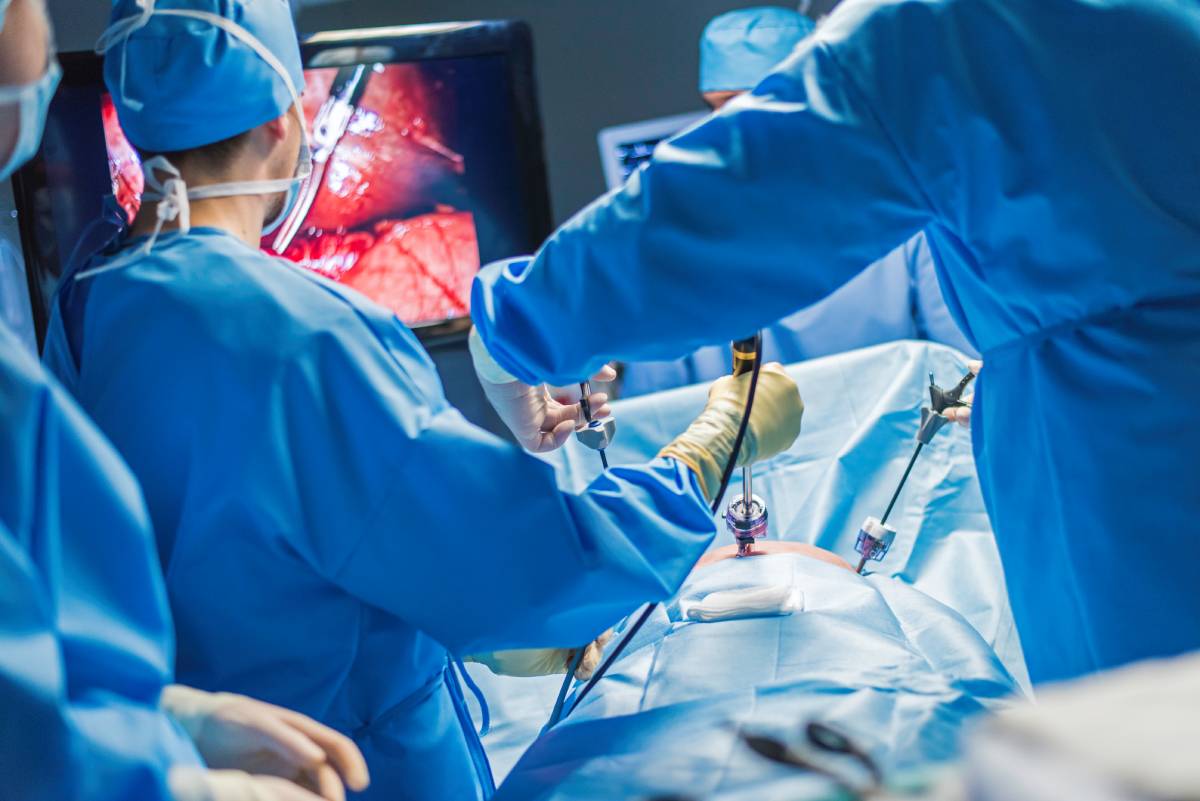
Laparoscopic surgery is a type of keyhole surgery - a minimally invasive surgical procedure involving a small incision - in which specialized camera and instrument equipment is used to perform operations through small portals rather than large open incisions. The procedure offers significant advantages including faster patient recovery, reduced postoperative pain, and minimal complications compared to traditional open surgery.
In the treatment of gastric cancer, laparoscopic gastrectomy has expanded to treat advanced cases following safety demonstrations in clinical trials. While the procedure requires five to six hours compared to three hours for open surgery, hospital stays average three to four days instead of five to seven days. Patients show reduced feeding tube dependency and potentially better tolerance for subsequent chemotherapy.
In gynecology, laparoscopic surgery serves as the standard approach for endometriosis treatment and fibroid removal. Two fibroid removal options exist: myomectomy, which preserves the uterus, and hysterectomy, with the choice depending on future pregnancy plans and individual patient factors.
A 2022 review demonstrates that laparoscopic techniques now represent standard practice for many abdominal procedures, with ongoing expansion into hepatectomy, pancreatectomy, and robotic-assisted applications. The evolution of laparoscopic surgery continues to extend the range of conditions that can be treated safely and effectively through minimally invasive approaches.