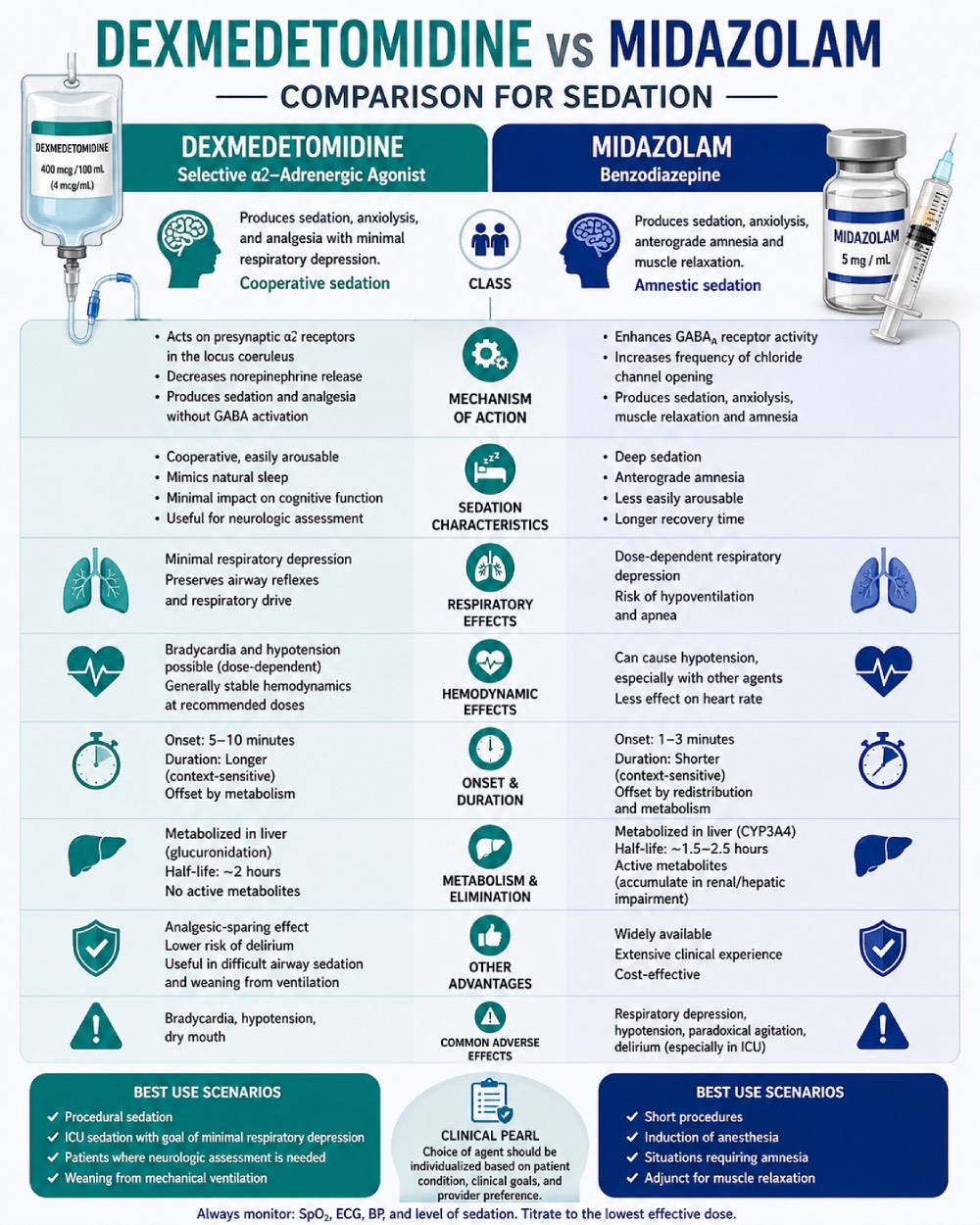
Sedation is a fundamental component of perioperative and critical care medicine, with drug selection critically influencing patient safety, comfort, and clinical outcomes. Midazolam, a benzodiazepine, has traditionally been the standard procedural sedation agent due to its quick action and anxiety-reducing properties. Dexmedetomidine, an alpha-2 receptor agonist, provides sedation and pain relief without causing respiratory depression typically seen with benzodiazepines.
Research demonstrates that dexmedetomidine at 1 mcg/kg produced sedation equal to or exceeding midazolam's highest studied dose. Importantly, the sedative effect of dexmedetomidine persisted beyond the 30-minute observation window, while midazolam's effects were already declining.
In prolonged ventilation settings, dexmedetomidine showed higher rates of low blood pressure (20.6% versus 11.6%) and slow heart rate compared to midazolam, though it correlated with earlier time to extubation and improved patient communication ability.
A systematic review across twelve trials found dexmedetomidine associated with higher satisfaction scores and lower pain levels, reflecting its analgesic properties that midazolam lacks.
For regional anesthesia applications, dexmedetomidine extended the time to first postoperative analgesic request by a mean of approximately 246 minutes.
In ambulatory cataract procedures, dexmedetomidine produced significantly delayed recovery room discharge (median 45 versus 21 minutes) despite superior sedation satisfaction.