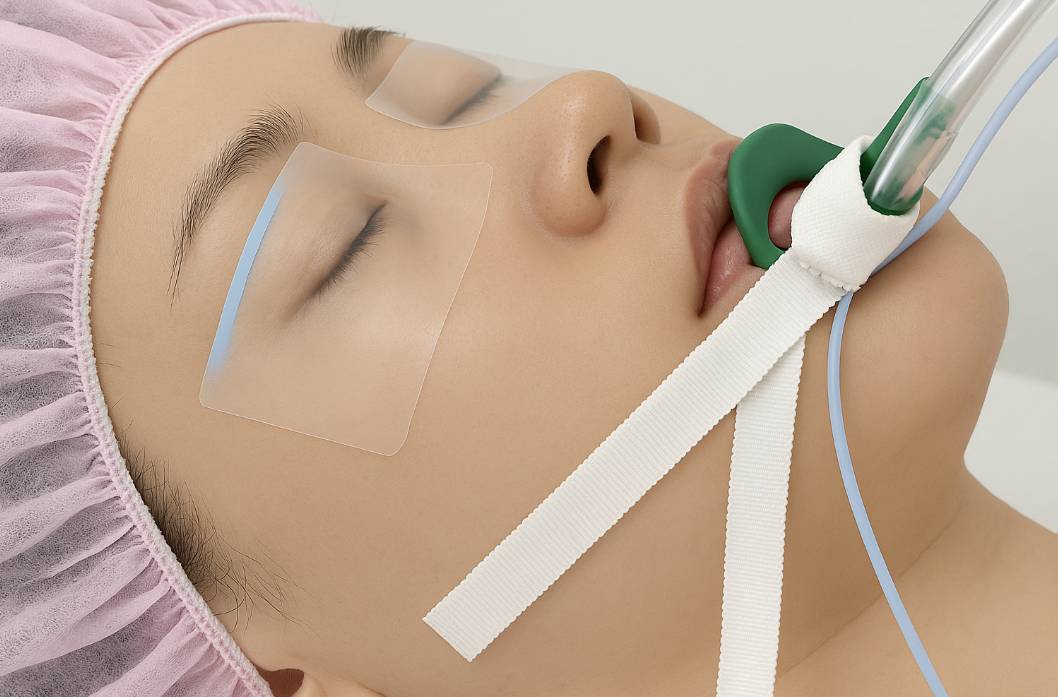
General anesthesia leads to a reversible loss of consciousness and muscle tone, including the loss of protective reflexes such as blinking and tear production. This makes the eyes vulnerable to drying, corneal abrasions, and trauma. The cornea can become damaged within minutes of anesthesia induction due to the inability to blink and reduced tear secretion.
Eye taping serves two primary functions: preventing corneal drying and shielding the eyes from mechanical injury. After induction, eyelids often remain slightly open due to muscle tone loss, exposing the cornea to air and desiccation. Surgical drapes, instruments, or personnel contact may also cause accidental eye injury during positioning and draping.
The procedure involves gently closing the eyes without applying pressure to the globe, then applying hypoallergenic surgical tape horizontally or diagonally across each eyelid. Excessive tightness risks increased intraocular pressure or bruising. For longer procedures or higher-risk patients, lubricating eye ointment or transparent dressings may be applied before taping.
Corneal abrasion is a recognized anesthesia-related complication. Most injuries are minor but cause postoperative discomfort including tearing, photophobia, and foreign body sensation. Rare serious complications include infections or scarring, particularly in patients with pre-existing ocular conditions. Prophylactic eye taping has been shown to significantly reduce the incidence of these injuries.
Certain patient populations require extra attention to eye protection, particularly during prone or lateral positioning procedures where pressure risks to the eye are heightened. Taping the eyes closed during anesthesia is a simple, low-cost intervention with significant benefits. When performed properly, it represents safe, effective standard anesthetic care exemplifying proactive risk reduction.