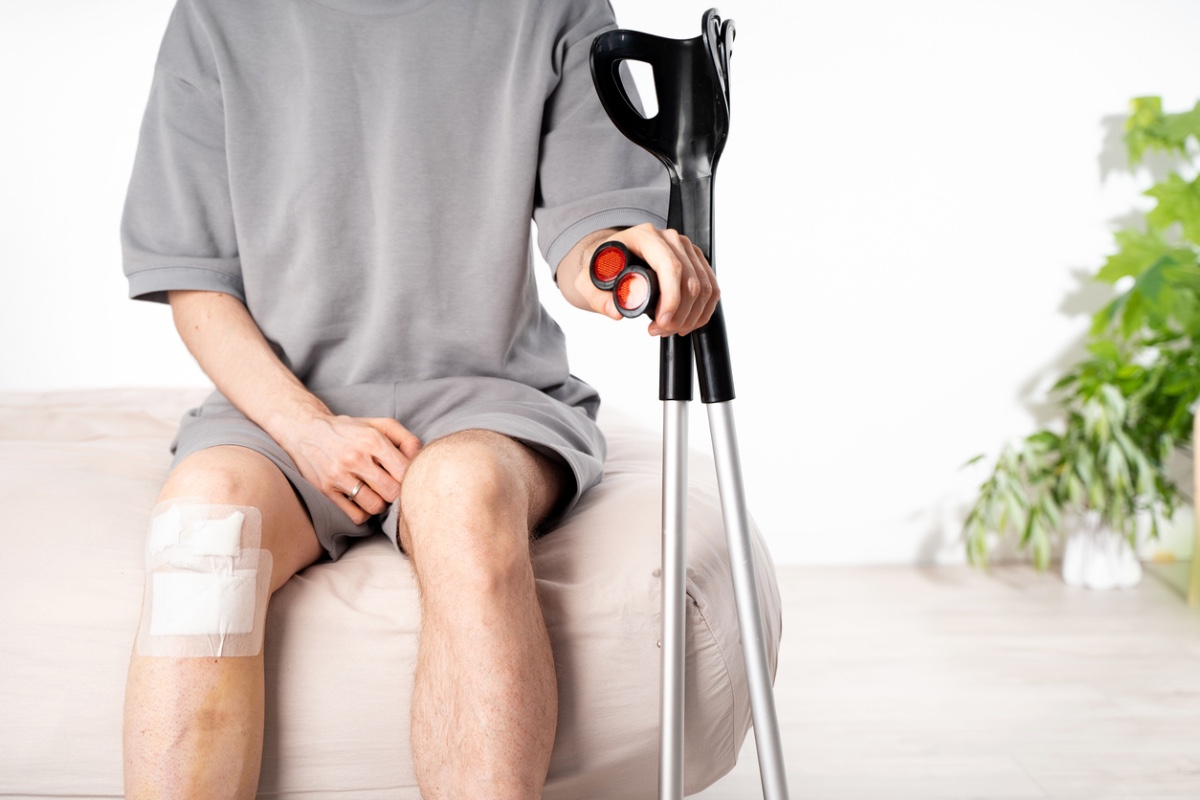
For many patients, modern total knee arthroplasty (TKA) enables a procedure that originally required inpatient admission to be performed in an ambulatory setting, producing advantages in patient comfort and cost effectiveness. However, in an ambulatory setting, the window during which an anesthesia provider has direct access to provide and adjust analgesia is compressed into a matter of hours, making a stage-by-stage understanding of the pain trajectory essential for clinicians designing same-day discharge pathways. The timeline of pain management for total knee surgeries involves three key stages: the pre- and intraoperative period, recovery in the PACU, and the days following discharge when a patient recovers at home.
The PROSPECT (PROcedure SPEcific Postoperative Pain ManagemenT) working group's 2022 update, drawn from 106 RCTs, provides the clearest framework for sequencing interventions across this timeline (4). The analgesic plan begins before incision. Oral paracetamol and an NSAID or COX-2-specific inhibitor are recommended preoperatively or intraoperatively and continued after surgery, since both agents show consistent, low-risk opioid-sparing effects when combined with peripheral techniques (4). A single preoperative or intraoperative dose of intravenous dexamethasone (≥10 mg) is likewise supported, reducing postoperative pain and nausea for up to 48 hours without additional risks in the available trials. Intraoperatively, a single-shot adductor canal block combined with peri-articular local infiltration analgesia preserves quadriceps strength better than femoral nerve block. For ambulatory total knee arthroplasty, effective pain management is necessary, but the timeline to discharge also requires sufficient function and strength, whereas the traditional femoral nerve block approach is associated with muscle weakness and resulting fall risk (2, 4).
Continuous peripheral catheters, epidural analgesia, and intrathecal morphine, while pharmacologically effective, are not favored for the ambulatory pathway: epidural techniques delay ambulation and increase urinary retention and PONV, and intrathecal morphine produces a rebound increase in opioid consumption between 18 and 24 hours alongside pruritus that can complicate early discharge (4).
Between 6 and 24 hours, ambulatory patients are discharged and pain management focuses on reducing pain to tolerable levels. Paracetamol and NSAID/COX-2 inhibitors are used as first-line medications, with opioids reserved as rescue analgesics. Throbbing, sharp, and aching descriptors of pain, reflective of the acute inflammatory phase, typically peak early and decline steadily over the first two postoperative weeks (3). By the two-week mark, most patients show significant reduction in pain, although tenderness and itching descriptors may transiently worsen as peripheral sensitization resolves (3). Notably, the persistence of "cramping" pain specifically at two weeks is one of the few individual descriptors associated with pain at three and six months, suggesting it warrants closer clinical attention during early follow-up (3).
A national U.S. cohort found that patients cluster into two distinct recovery trajectories by the eight-week mark—approximately 72% show fast pain resolution while 27% remain slow responders—and analysis found that a patient’s categorization independently predicts their knee pain severity at six months (5). Looking further out, systematic review evidence identifies pain catastrophizing, younger age, and moderate-to-severe acute postoperative pain as high-certainty predictors of persistent post-surgical pain beyond three months, with absolute risk increases of 20–35% (1). These findings highlight the importance of providing adequate pain control and identifying poor responders in the early stages of the recovery timeline after total knee arthroplasty.
- Ashoorion, V., Sadeghirad, B., Wang, L., Noori, A., Abdar, M., Kim, Y., Chang, Y., Rehman, N., Lopes, L. C., Couban, R. J., Aminilari, M., Malektojari, A., Ghazizadeh, S., Rehman, Y., Ghasemi, M., Adili, A., Guyatt, G. H., & Busse, J. W. (2023). Predictors of persistent post-surgical pain following total knee arthroplasty: A systematic review and meta-analysis of observational studies. Pain Medicine, 24(4), 369–381. https://doi.org/10.1093/pm/pnac154
- Karlsen, A. P. H., Wetterslev, M., Hansen, S. E., Hansen, M. S., Mathiesen, O., & Dahl, J. B. (2017). Postoperative pain treatment after total knee arthroplasty: A systematic review. PLoS ONE, 12(3), e0173107. https://doi.org/10.1371/journal.pone.0173107
- Koga, M., Maeda, A., & Morioka, S. (2024). Description of pain associated with persistent postoperative pain after total knee arthroplasty. Scientific Reports, 14, 15217. https://doi.org/10.1038/s41598-024-66122-w
- Lavand'homme, P. M., Kehlet, H., Rawal, N., Joshi, G. P., & PROSPECT Working Group of the European Society of Regional Anaesthesia and Pain Therapy (ESRA). (2022). Pain management after total knee arthroplasty: PROcedure SPEcific Postoperative Pain ManagemenT recommendations. European Journal of Anaesthesiology, 39, 743–757. https://doi.org/10.1097/EJA.0000000000001691
- Singh, J. A., Lemay, C. A., Nobel, L., Yang, W., Weissman, N., Saag, K. G., Allison, J., & Franklin, P. D. (2019). Association of early postoperative pain trajectories with longer-term pain outcome after primary total knee arthroplasty. JAMA Network Open, 2(11), e1915105. https://doi.org/10.1001/jamanetworkopen.2019.15105