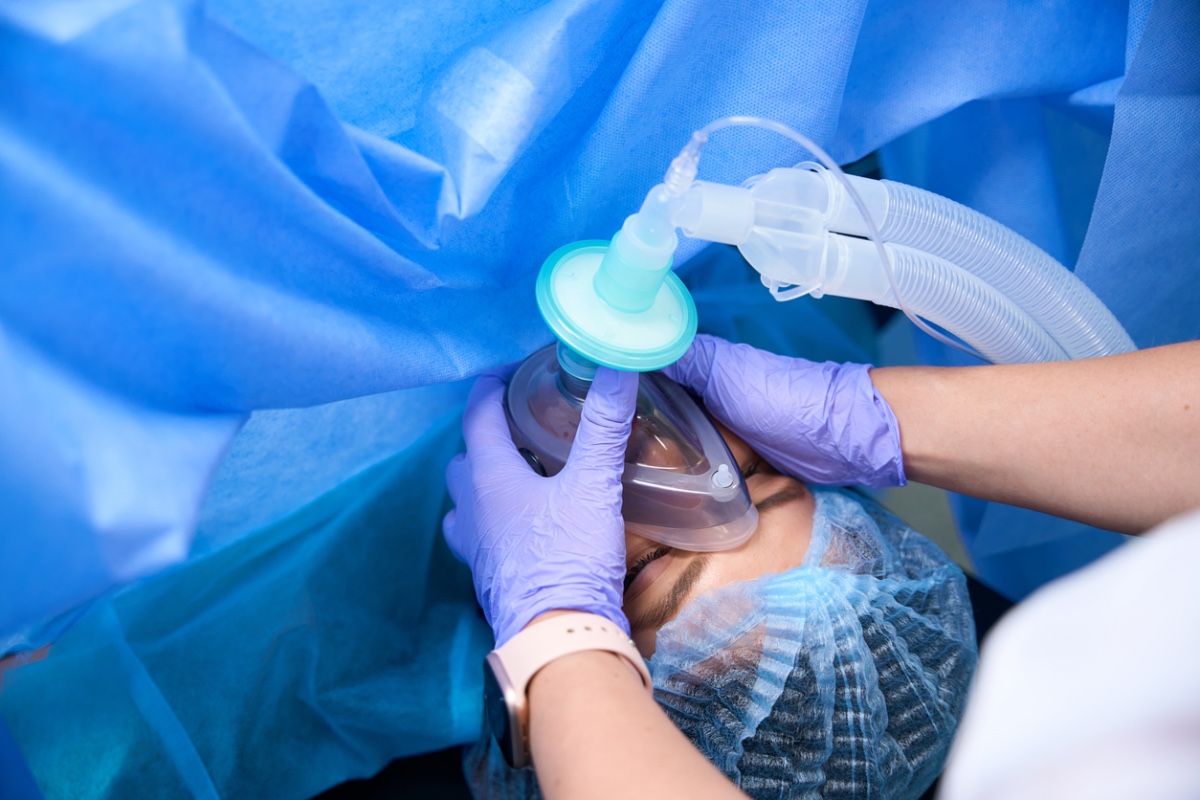
In some cases, anesthesia can be administered without endotracheal intubation, which requires maintaining a sufficient degree of airway patency for adequate ventilation and oxygenation. Depending on the procedure and anesthetic technique, patients may breathe spontaneously or receive assisted ventilation through a face mask or supraglottic airway device. Although avoiding endotracheal intubation eliminates certain instrumentation-related risks, it necessitates greater vigilance against airway obstruction, hypoventilation, or aspiration during anesthesia and makes proper airway management critical. Appropriate patient selection, vigilant monitoring, and readiness for airway intervention are therefore essential [1,2].
Preoperative airway assessment is fundamental to determining whether a non-intubated technique is appropriate. Important considerations include previous airway difficulties, obesity, obstructive sleep apnea, limited mouth opening, restricted neck mobility, and craniofacial abnormalities. Patients with obstructive sleep apnea are particularly susceptible to airway compromise because anesthesia reduces pharyngeal muscle tone and protective arousal responses. The velopharynx is especially vulnerable to collapse, even when diaphragmatic activity and respiratory effort are preserved [2,3]. Limited mobility of the neck or jaw may impair manual rescue maneuvers in the event of loss of airway patency.
Simple positioning maneuvers, including head extension, chin lift, and jaw thrust, are necessary skills for airway management when administering anesthesia without endotracheal intubation or an airway adjunct. These techniques improve airway patency by modifying upper airway anatomy and reducing obstruction. Continuous positive airway pressure (CPAP) may provide additional support by maintaining positive intraluminal pressure. In a study involving 16 anesthetized children undergoing adenoidectomy, Bruppacher et al. demonstrated that jaw thrust, with or without CPAP, was more effective than chin lift in improving inspiratory airflow and ventilation [4].
Airway adjuncts, including oropharyngeal and nasopharyngeal airways, can facilitate ventilation when positioning alone is insufficient. Supraglottic airway devices provide an alternative to face mask ventilation by establishing a conduit above the glottis. However, they do not provide the same degree of airway protection as a cuffed endotracheal tube, particularly against aspiration risk. Their suitability depends on procedural requirements and other factors specific to different clinical scenarios [2,3].
Anesthetic drug selection also influences airway safety. Propofol and opioids can produce dose-dependent respiratory depression, upper airway obstruction, and apnea, with combined administration increasing these risks. Ketamine generally preserves spontaneous ventilation more effectively, although laryngospasm, excessive secretions, and respiratory complications remain possible [1]. Additionally, a randomized study of 64 children undergoing rigid bronchoscopy with spontaneous ventilation found that sevoflurane anesthesia was associated with less breath holding and oxygen desaturation than propofol–remifentanil anesthesia [5].
Continuous respiratory monitoring is essential throughout non-intubated anesthesia. Pulse oximetry evaluates oxygenation, while capnography provides information about ventilation and may reveal respiratory depression before significant desaturation develops. Clinical observation of respiratory effort, airflow, and chest movement remains necessary because oxygen saturation alone cannot establish adequate ventilation [1,2].
If airway obstruction occurs, management should prioritize restoring oxygenation through repositioning, airway maneuvers, adjuncts, or assisted ventilation. Persistent ventilation failure may require supraglottic airway placement, endotracheal intubation, or emergency invasive airway access. Difficult airway guidelines emphasize early assistance, limiting repeated unsuccessful attempts, and maintaining oxygenation throughout rescue interventions [2].
The success of anesthesia without endotracheal intubation depends on balancing anesthetic depth with preservation of respiratory function through airway management. Careful patient assessment, appropriate airway support, continuous monitoring, and preparation for escalation are central to maintaining patient safety.
- Tobias JD, Leder M. Procedural sedation: a review of sedative agents, monitoring, and management of complications. Saudi J Anaesth. 2011;5(4):395–410. doi:10.4103/1658-354X.87270.
- Jung H. A comprehensive review of difficult airway management strategies for patient safety. Anesth Pain Med (Seoul). 2023;18(4):331–339. doi:10.17085/apm.23123.
- Hillman DR, Platt PR, Eastwood PR. The upper airway during anaesthesia. Br J Anaesth. 2003;91(1):31–39. doi:10.1093/bja/aeg126.
- Bruppacher H, Reber A, Keller JP, Geiduschek J, Erb TO, Frei FJ. The effects of common airway maneuvers on airway pressure and flow in children undergoing adenoidectomies. Anesth Analg. 2003;97(1):29–34. doi:10.1213/01.ANE.0000069508.69518.97.
- Liao R, Li JY, Liu GY. Comparison of sevoflurane volatile induction/maintenance anaesthesia and propofol–remifentanil total intravenous anaesthesia for rigid bronchoscopy under spontaneous breathing for tracheal/bronchial foreign body removal in children. Eur J Anaesthesiol. 2010;27(11):930–934. doi:10.1097/EJA.0b013e32833d69ad.